Croatia Coast Road Trip: 7 Destinations and a Hidden Gem Worth the Drive
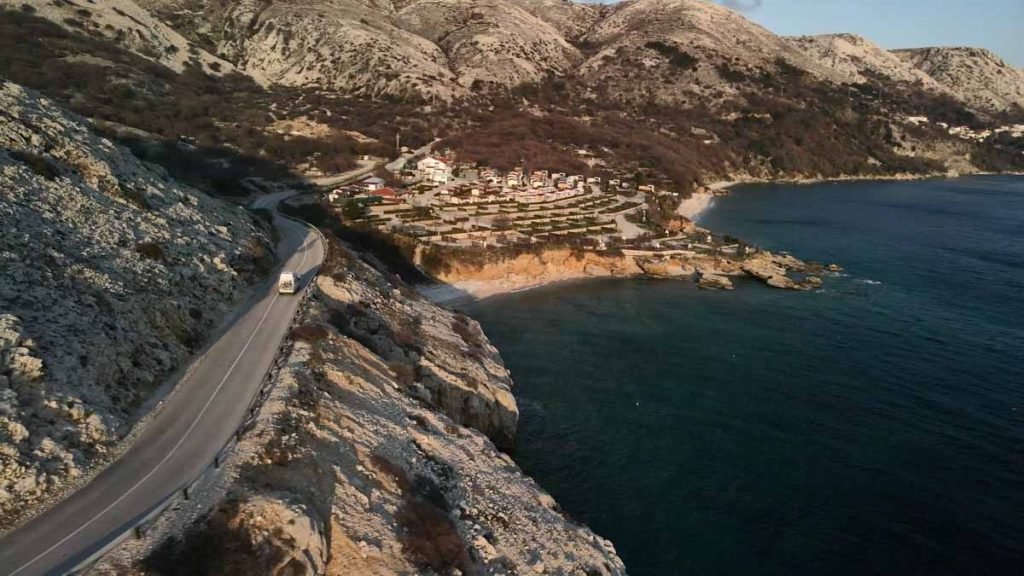
The Dalmatian coast is one of the most beautiful stretches of asphalt in Europe. I have visited it on multiple occasions. The D8 coastal road is definitely the highlight of any road trip, with its beautiful views and villages to stop by.
But here is the thing. Most people who fly into Split or Dubrovnik never see the best of it. They head straight to the Old Town, spend three days in the same square metre of pavement, and fly home wondering what all the fuss is about.
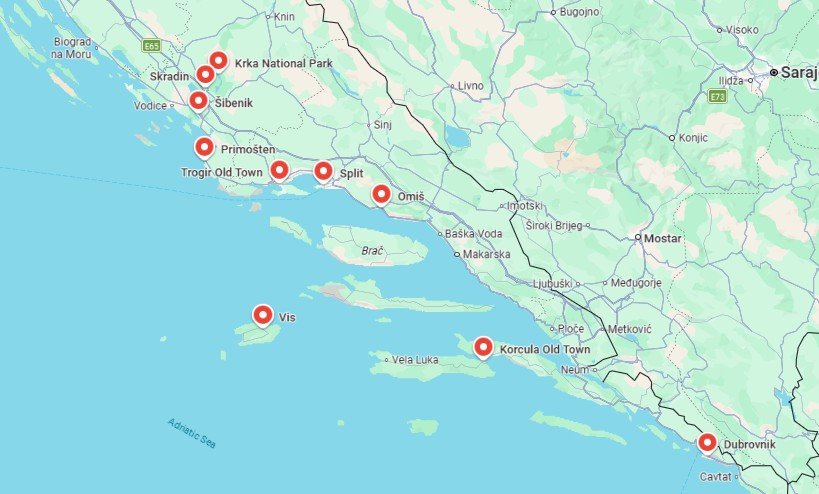
The fuss is out here, on the road. Below are seven stops — plus one hidden gem — that I think represent the very best of the Dalmatian coast by car. I have reordered them into a loop that starts and ends near Split Airport, but if you are flying into Dubrovnik, simply reverse the route and begin from the bottom.
Trogir — The Strategic Finale (or Start)
Most road trippers overlook Trogir entirely, which is genuinely surprising. It sits on a tiny island connected to the mainland by a bridge, barely five kilometres from Split Airport. If you have rented a car in Split and you have an early flight home, Trogir is where you want to spend your last night — not Split.
You can walk the UNESCO-listed medieval core in the evening without the daytime crowds, have dinner by the water, and still be at the terminal in ten minutes the next morning.
The anecdote: Trogir’s Cathedral of St. Lawrence took over four centuries to finish, but the real marvel is the main portal. Master builder Radovan spent ten years carving it and signed his name right there in the stone — alongside a self-portrait. That makes it one of the earliest known signed works by a medieval artist anywhere in Europe. He was essentially saying, “I made this, and I want credit.” In an age when most craftsmen remained anonymous, Radovan was centuries ahead of the personal-brand curve.
Šibenik — The City Everyone Drives Past
Twenty minutes north of Primošten — or about an hour north of Split if you are coming from the airport — is Šibenik. I will be honest: I drove past it myself without even noticing that. What a mistake.
Šibenik is the oldest purely Croatian city on the coast. Unlike Split, Dubrovnik, or Zadar, it was not founded by Greeks, Romans, or Venetians. Croatians built it themselves. The Cathedral of St. James is a UNESCO site and one of the most significant Renaissance buildings in the Mediterranean — constructed entirely from stone, without a single piece of wood in the structure.
The anecdote: Look closely at the cathedral’s exterior frieze and you will find seventy-one sculpted human heads. They are not saints, kings, or biblical figures. They are ordinary citizens of Šibenik — neighbours, traders, fishermen — immortalised in stone by the architect Juraj Dalmatinac. It was a radical idea in the 15th century, and it makes the building feel surprisingly intimate. You are not looking at religious figures; you are looking at selfies, medieval-style.
Do you actually need a car
You can visit all these places also by public transportation and ferries; however, you will need more time – so much more that for a 10-day road trip you will probably need 20 or more days by bus, and you won’t be able to stop in the occasional villages along the route that will enhance your experience so much!
That’s why I always suggest renting a car in Croatia. You transform your holiday from a destination-to-destination trip into a real experience to remember forever.
You do not need any fancy car, but you do need to book early, especially for July and August when availability becomes an issue.
I personally always use DiscoverCars, the comparison platform that works as a sort of Airbnb for rentals, with real customer ratings from people who actually completed a trip. I filter above 8 or even 9 stars to shortlist the most trusted operators and lock in the rate. Cancellation is free up to 48 hours before pickup, so there is no reason to wait.
Krka National Park — Where Water Turns to Emerald
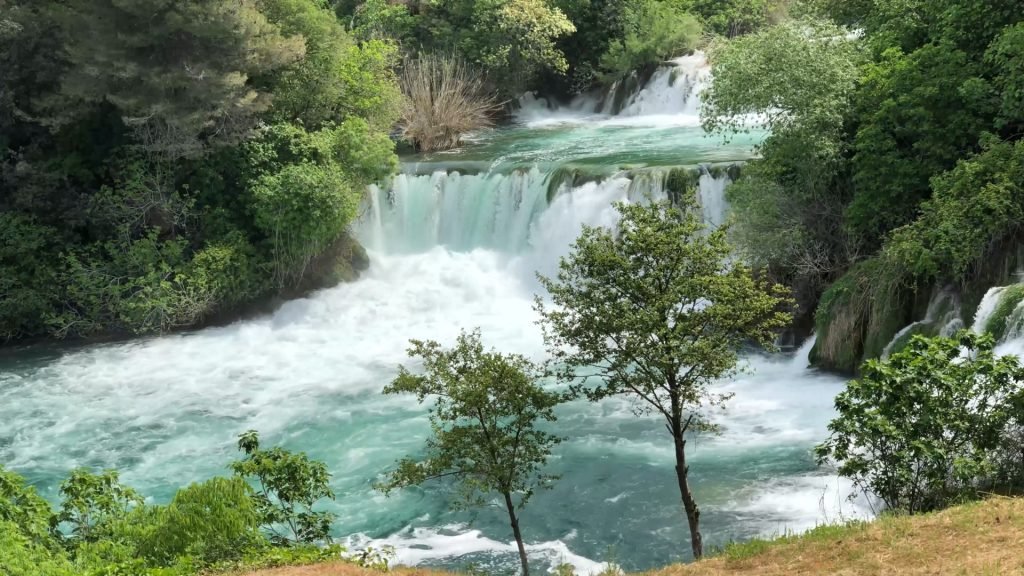
Twenty minutes inland from Šibenik, the Krka River has carved a limestone canyon so beautiful it almost feels artificial. The wooden walkways at Skradinski Buk take you right alongside waterfalls and pools that shift from turquoise to emerald depending on the light. Photos do not do it justice. You need to hear the water and feel the spray.
A practical note: swimming in the falls was banned in 2021 for environmental protection. Go early in the morning if you can. By midday in August, the walkways are packed, and the atmosphere changes completely.
The anecdote: In 1895, just two days after Nikola Tesla switched on the world’s first hydroelectric plant at Niagara Falls, a smaller version opened right here at Skradinski Buk. It was only the second hydroelectric plant on the planet, and it powered the streetlights of Šibenik — making Šibenik one of the first cities in Europe with electric public lighting.
Skradin — The Hidden Gem You Will Miss If You Blink
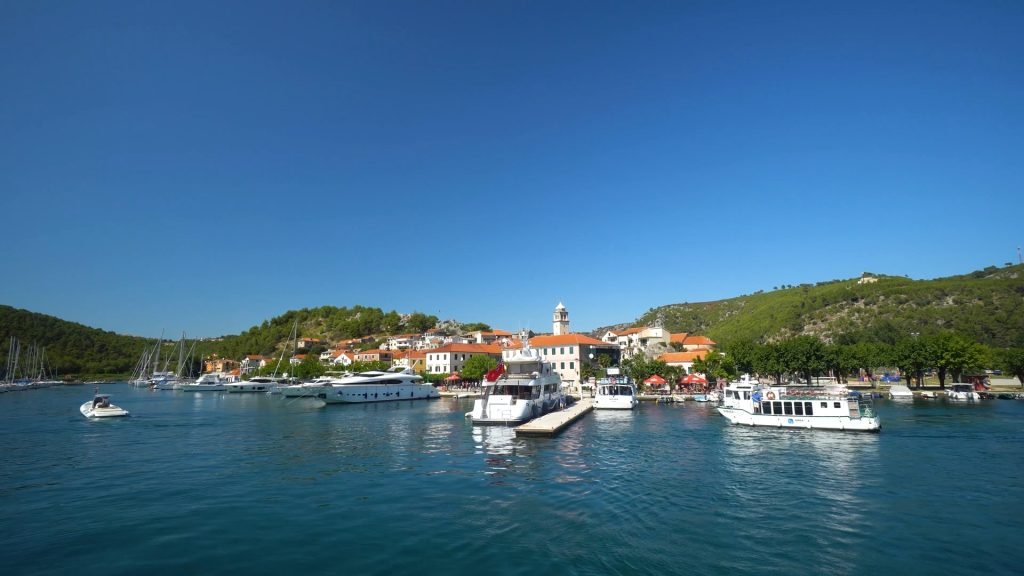
Right at the entrance to Krka National Park sits Skradin, a tiny walled town where the river becomes navigable. Almost everyone passes through it on the park boats, but almost nobody stops. That is exactly why you should.
The old town is genuinely untouched by mass tourism. No souvenir shops, no cruise infrastructure, just a medieval core, a small harbour, and local restaurants serving river fish and lamb that are nothing like what you find in the coastal resorts.
The anecdote: Skradin has a dessert called Skradinska torta that takes two full days to prepare. The recipe involves layers of almonds, walnuts, chocolate, and rose liqueur, and it was so prized in the 19th century that it was shipped to the Habsburg imperial court in Vienna. Emperors ate cake from this tiny riverside town. Today, a few local families still make it the traditional way, and if you ask nicely at the right restaurant, you might get a slice 😉
Primošten — The Peninsula That Looks AI-Generated
The drive from Šibenik to Primošten is about 30 minutes along the coast, and it is worth every minute. Primošten is a small town built on a peninsula connected to the mainland by a narrow causeway, with white stone houses climbing to a church at the top. From a distance, it looks too perfect to be real.
The surrounding hills produce Babić, one of Croatia’s most distinctive red wines, grown in stone-walled terraces that have been here for centuries. If wine matters to you, ask locally about a tasting.
The anecdote: Those stone walls around the vineyards are not just pretty — they are a feat of human stubbornness. Local farmers built them by hand over centuries, clearing the rocky soil stone by stone, until they created a patchwork of terraced fields that looks almost like an amphitheatre. In 2021, these Primošten vineyards were officially recognised by UNESCO as a unique example of human adaptation to the landscape.
Omiš — Where Pirates Once Ruled the Adriatic
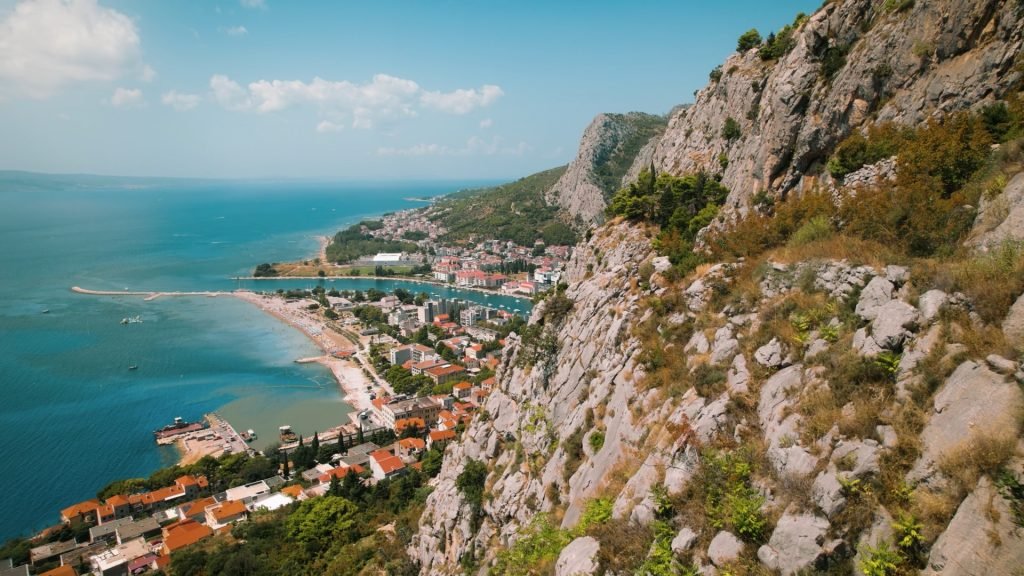
Back south, about twenty minutes from Split, Omiš sits at the mouth of the Cetina River gorge. The river cuts through sheer limestone cliffs before meeting the sea, and the town was once the most feared pirate stronghold on the Adriatic.
The fortress ruins still cling to the cliff face. If you have half a day, the rafting on the Cetina is genuinely one of the best outdoor activities on the coast. Park at the edge of the old town and walk in — parking is straightforward, which is rare in Dalmatia.
The anecdote: The Pirates of Omiš were not petty thieves — they were a professional naval power. In the 12th and 13th centuries, their fleet of fast ships called sagittas (arrows) controlled the Adriatic shipping lanes so completely that the Pope himself organised a crusade against them in 1221. The pirates fought back so effectively that they eventually negotiated a treaty with the Papacy, granting them special privileges to raid Venetian merchant ships. Essentially, they were so good at piracy that the Vatican gave them a licence for it.
Korčula Old Town — Before the Cruise Ships Arrived
From Omiš, continue south and take the short ferry from Orebić on the Pelješac Peninsula across to Korčula island. The crossing takes about fifteen minutes and is one of the most scenic ferry rides in Croatia.
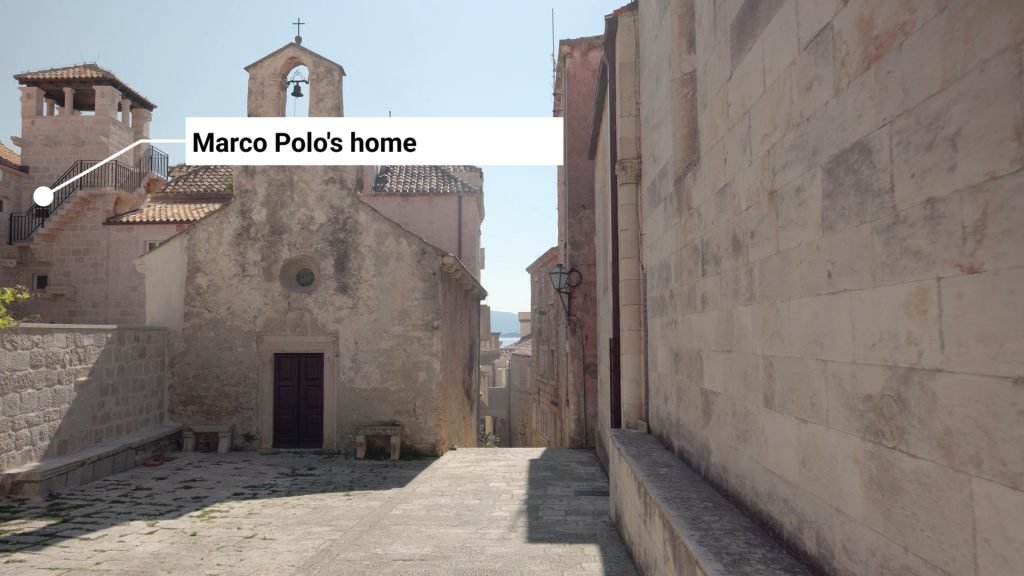
Korčula Old Town is what Dubrovnik looked like before the cruise ships. A walled medieval city on a peninsula, with towers, narrow stone lanes, and a cathedral, all surrounded by sea on three sides. The town claims to be the birthplace of Marco Polo. Historians debate it, but the claim has stuck for centuries.
If you rent the car in Dubrovnik, Korčula becomes the natural starting destination of this road trip.
The anecdote: Korčula has been performing the Moreška sword dance since the 16th century, and they still perform it regularly in summer. It is not a folk show for tourists — it is a genuine tradition that tells the story of the Black King capturing the White King’s bride, with two armies clashing swords in a choreographed battle that lasts nearly half an hour. The performers are local townspeople, not professional actors, and the swords are real. It is one of the last places in Europe where a medieval street battle is still part of the social calendar.
Vis Island — The Time Capsule
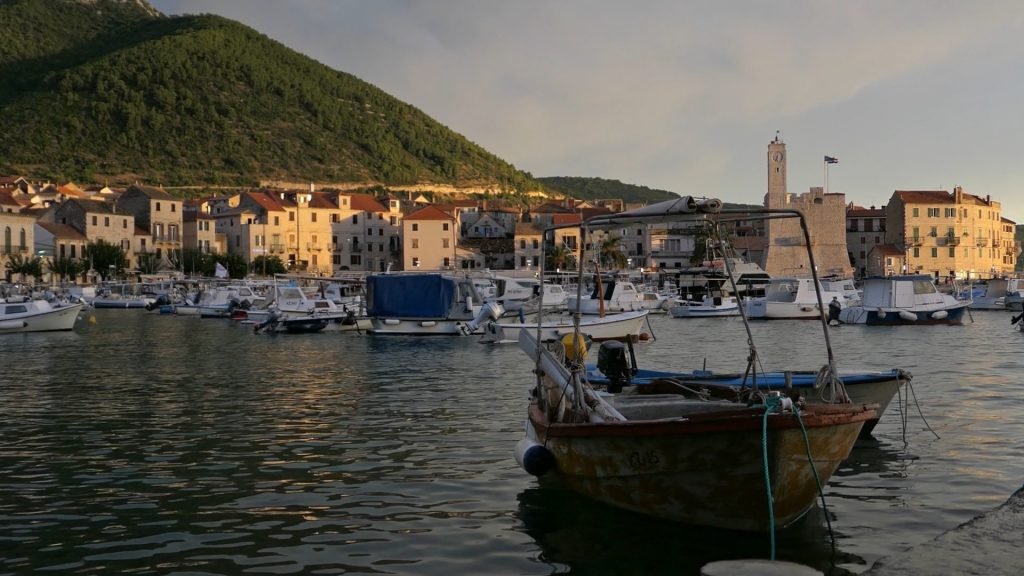
The final stop is also the most unique, and it requires a bit of planning. Vis was a Yugoslav military base until 1989, completely closed to foreigners. The result is an island that was never developed for mass tourism — no package resorts, no cruise infrastructure, no souvenir shops every ten metres. Just fishing villages, extraordinary food, and local life that feels completely untouched.
There is a direct ferry from Split to Vis Town that takes about two and a half hours. Once on the island, I would actually suggest skipping the rental car entirely. The island is small enough that a scooter or quad is genuinely the better option — and more fun. If you are doing this loop with a car, leave it at the Split port and collect it when you return.
Spend at least one full day on Vis. The fishing village of Komiža on the western side is spectacular. The Blue Cave nearby is one of the great natural wonders of the Adriatic. And the local food, especially the fresh fish, is worth the ferry ride on its own.
The anecdote: During the Cold War, Tito built a secret submarine tunnel on Vis large enough to hide entire warships from NATO surveillance. It was carved deep into the island’s rock face and remained classified until the 1990s. Even today, you can visit the tunnel by boat — a concrete cavern that opens directly into the sea, designed to make a destroyer simply vanish from satellite view. The island was so strategically important that it was frozen in time for half a century, which is exactly why it feels so authentic now.
Practical Notes for the Road
Ferries: If you are taking the car to Korčula or Vis, book ferry tickets well in advance in July and August. Car spaces sell out weeks ahead.
Car size: Stick to a compact. The Dalmatian coastal roads are narrow, the island lanes are tighter, and parking in the old towns is genuinely challenging with anything larger. Automatics are available but cost roughly €15–€20 more per day. Nowadays, I rent my cars only from my favourite comparison website DiscoverCars. They actual rating system works so well that I never got disappointed with scammy operators.
Insurance: I always add full coverage through DiscoverCars for €8–€10 per day. The coastal roads, tight parking, and occasional scratch from a stone wall make it a no-brainer. Unfortunately, my credit card coverage has a €700 excess, which makes it useless for the small dents that actually happen here. Check your in case.
Timing: This loop works comfortably in seven to ten days. Less than that and you are rushing. More than that and you will start finding your own hidden gems, which is honestly the whole point.
Final Word
The Dalmatian coast is not a place to tick boxes. It is a place to drive slowly, stop often, and let the road surprise you. These seven stops — and Skradin, the hidden gem most people miss — are my starting point. But the real magic happens in the gaps between them: the roadside surprise you did not plan for, the swimming spot with no name, the view that makes you pull over and just stare.
